Project · applications
PiSplit
OCR-driven expense workflow that converts receipts into itemized splits, balances, and reimbursement tracking.
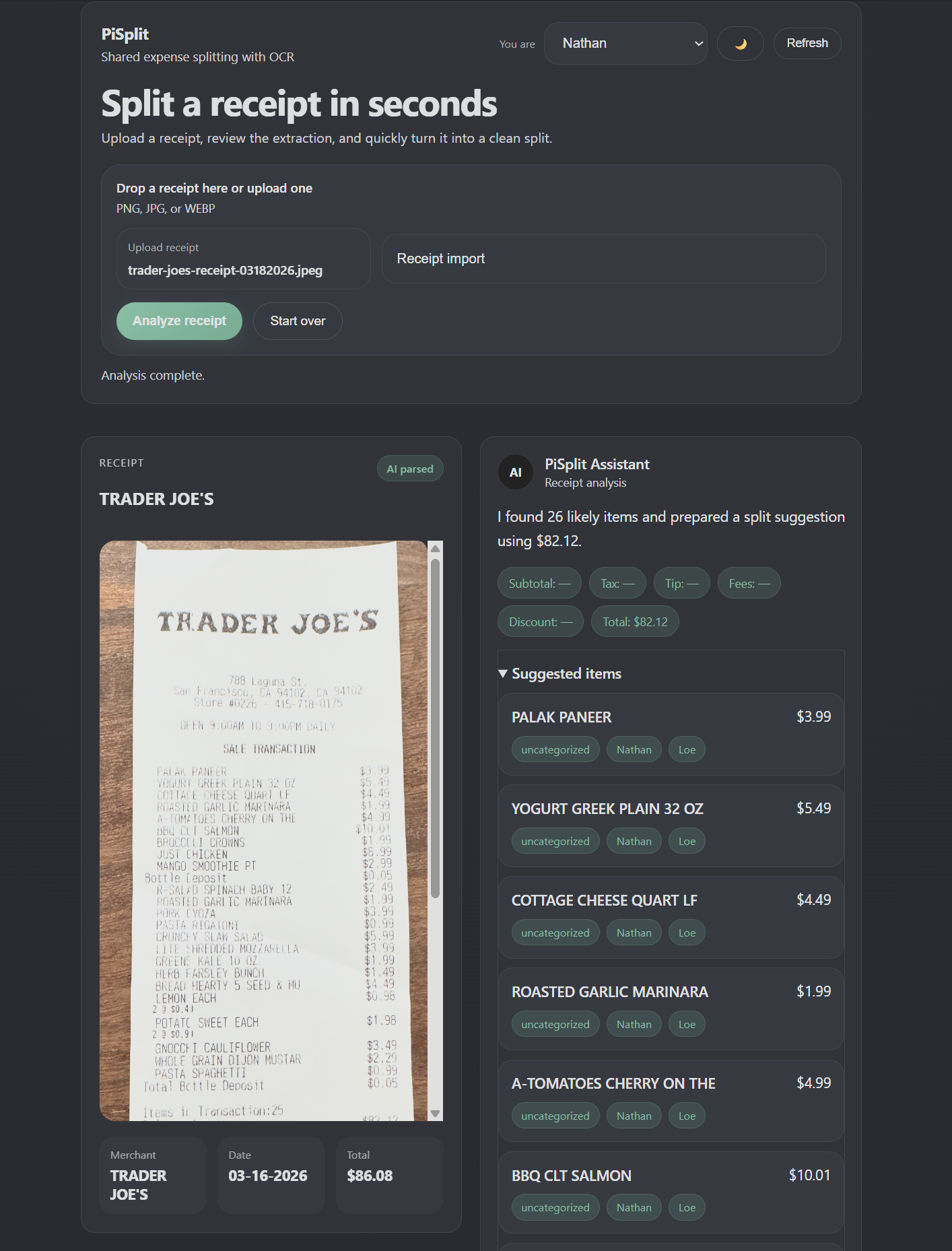
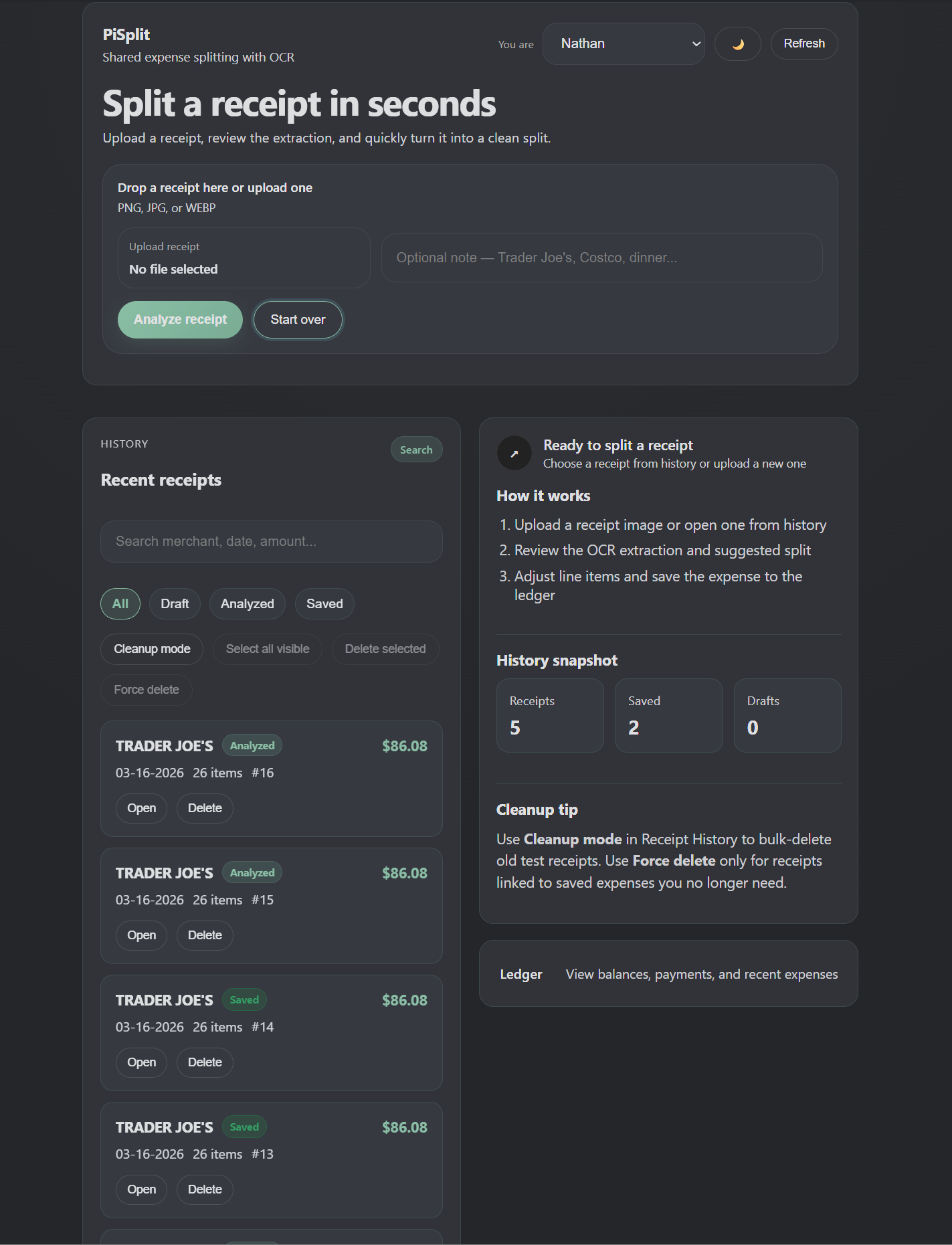
Overview
PiSplit is a self-hosted household expense workflow designed to make shared purchases easier to capture, review, and settle. It combines receipt upload, OCR extraction, itemized review, and balance tracking so expenses can be recorded without relying on third-party consumer finance apps.
Technology Stack
Capabilities
- Receipt upload from phone or desktop
- OCR-based text extraction
- Itemized expense creation
- Household balance tracking
- Settlement suggestions
- Structured reimbursement workflow
Implementation
PiSplit is implemented as a Dockerized FastAPI service backed by PostgreSQL. Receipt images are uploaded through a lightweight web UI, processed with OCR, converted into candidate line items, and then reviewed as structured shared expenses with participant-specific splits.
Problem
Shared expenses are easy to forget, frustrating to split manually, and especially messy when a single receipt includes both shared and personal items. I wanted a private workflow that could ingest a receipt photo, extract line items, assign participants, and maintain running balances across the household.
Architecture
- Input Layer
- Phone upload
- Web UI
- Receipt images
- Processing Layer
- Tesseract OCR
- receipt parsing
- AI-assisted analysis
- Application Layer
- FastAPI service
- expense creation
- itemized split workflows
- Persistence Layer
- PostgreSQL
- receipt storage
- balances + settlements
Phone / Browser Upload
          │
          ▼
       PiSplit UI
          │
          ▼
     OCR + Parsing Layer
 Tesseract • receipt extraction • item detection
          │
          ▼
    Split / Review Engine
 participants • itemized assignment • totals
          │
          ▼
      FastAPI Backend
 expense creation • balances • settlements
          │
          ▼
       PostgreSQL
 receipts • expenses • household ledger
Public-safe architecture for the PiSplit household finance workflow.
Outcome
PiSplit reduces manual household expense overhead by turning messy receipts into a cleaner, faster workflow for review, balances, and reimbursements.
What's Next
- Smarter receipt parsing
- Model-assisted item classification
- Improved phone upload flow
- Better split suggestions
Related Projects
Homelab Infrastructure
Distributed compute fabric for local AI, automation, observability, media workflows, and experimental applications.
AI Agent Orchestration
Multi-model agent environment for tool use, infrastructure interaction, and workflow execution across local systems.
Cronitor
Runtime monitoring system for tracking job execution, failures, and automation health across distributed workflows.